
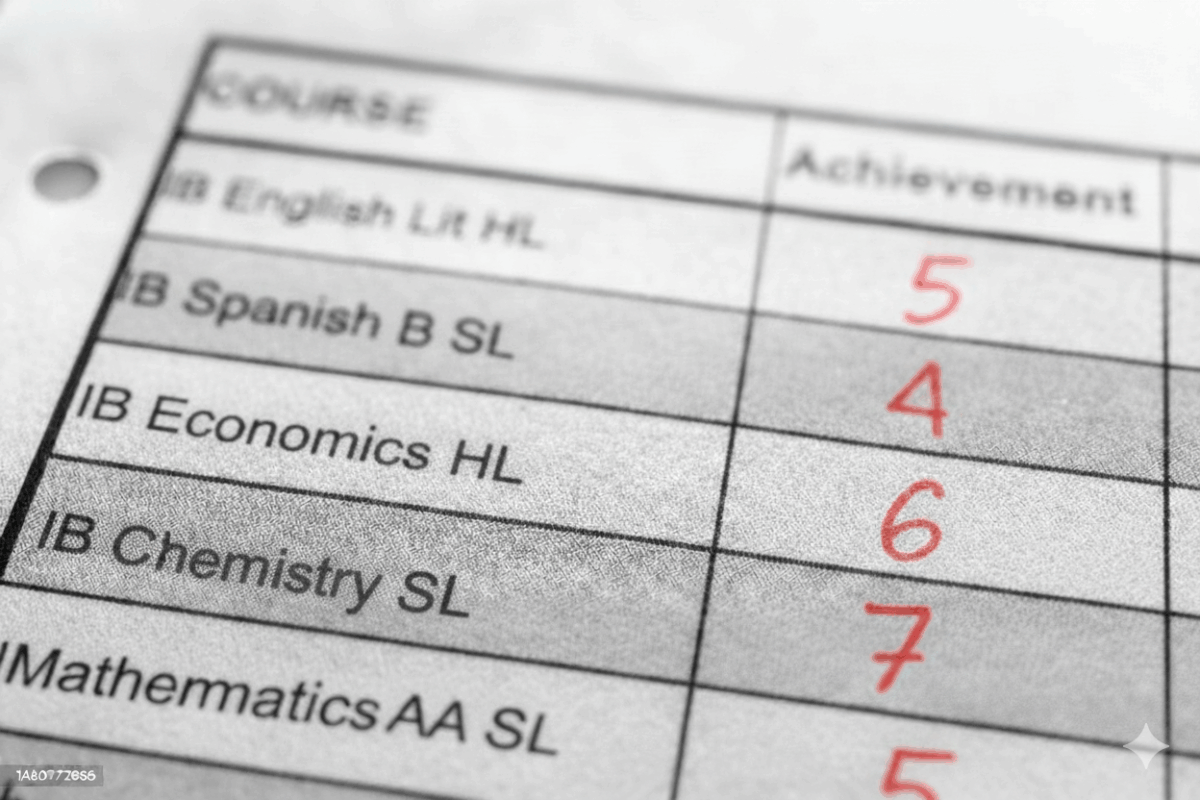
Key Takeaways
- The best predicted grades are accurate predicted grades—inflated grades can create unrealistic conditional offers.
- Teachers base predictions on assessments, performance trends, and professional experience, not on requests from students or parents.
- Students should focus conversations with teachers on performance and improvement, not just “grades.”
- If you feel your predicted grades are inaccurate, there are respectful and effective steps you can take.
- Lifestyle factors like sleep, diet, exercise, and study environment play a big role in boosting genuine academic performance.
Introduction
If you’re an IB Diploma student, you’ve probably heard a lot about predicted grades. They show up midway through Grade 12 and suddenly become the centerpiece of your university applications. For many students, predicted grades feel like the make-or-break factor in whether you’ll get that dream offer from the UK, the US, Canada, the Netherlands, Australia, or beyond.
But here’s the truth: predicted grades aren’t just about getting the highest number possible. They’re about accuracy. A strong predicted grade is one that reflects your real potential, not wishful thinking. In this guide, we’ll break down what predicted grades are, how universities use them, and what you can do—authentically and effectively—to maximize your academic performance.
What Are IB Predicted Grades?
Predicted grades are your teachers’ professional estimate of the score you’re likely to achieve on your final IB Diploma exams. They’re usually submitted during the first semester of Grade 12, right when you’re finalizing applications to universities around the world.
Why do they matter? Because when universities receive your application, they typically have:
- Your transcripts from Grades 9–11
- Your predicted grades from Grade 12
That’s it. For many countries, your predicted grades are the only senior-year evidence they’ll see before deciding whether to give you an offer. Universities with application deadlines in Semester 2 typically also get to see an updated transcript with your Semester 1 grades, but predicted grades remain the headline number.
Universities then use these predicted grades to determine the specific details of your conditional offer. Some conditional offers will be very specific (ie Overall score of 35 with a 6-5-5 in your Higher Level subjects), others will only state an expected overall score. American universities often use the phrase “Maintain your current academic performance” in reference to the conditions of your offer.
Why Accuracy Matters More Than Inflation
It might be tempting to hope for higher predictions. After all, a predicted 40 looks better than a predicted 36, right? But inflated grades can actually hurt you.
Here’s why:
- Universities may give you a conditional offer based on your predicted score. If that offer requires a 40 and your final result is a 36, you’ve lost the place.
- Accurate predictions protect you. If you’re predicted a 36 and receive an offer at 36, that’s achievable. If you overpromise, you risk underdelivering.
- Teachers and IB coordinators are expected to predict responsibly. Their professional reputation depends on it. The best schools publish the statistical difference between their predicted grades and students’ actual attainment. This is a coveted number.
The bottom line: the best predicted grades are accurate predicted grades.
How Predicted Grades Are Determined
Predicted grades are not pulled out of thin air. Teachers usually rely on:
- Empirical evidence: your scores on IAs, topic tests, projects, and past IB-style assessments.
- Performance trends: whether you’re improving, plateauing, or slipping over time.
- Potential: how you perform under exam-like conditions versus day-to-day.
- Past experience: what similar past students have achieved in final exams.
- Guidance from school leadership: IB coordinators and department heads provide oversight to ensure consistency.
This process is professional, careful, and usually more accurate than students give it credit for.
Talking to Teachers: Focus on Performance, Not Grades
Here’s a golden rule: never use the word “grade” when discussing your predicted grade. Teachers don’t respond well to grade-focused conversations—they see it as “grade grubbing.”
Instead, talk about performance:
- “I don’t feel like I’m reaching my potential. What can I do to get closer?”
- “What are the top three things you recommend I do to improve in your class?”
- “How can I prepare more effectively for upcoming assessments?”
Teachers love their subject areas. Show genuine interest, engage authentically, and focus on learning. Improvement will follow—and your predicted grades may reflect that growth.
What If You Think Your Predicted Grades Are Inaccurate?
Sometimes students are shocked by their predicted grades. Maybe they’re lower than expected. Before you panic, consider a few things:
- Doing well on individual topic tests doesn’t always mean you’ll score the same when multiple topics are combined in the final IB exams.
- Teachers may draw on experience with past students who performed differently than their day-to-day scores suggested.
Still, if you feel something’s off, here are the steps:
- Ask politely how the grade was calculated. Don’t accuse—just seek clarity.
- Have the conversation yourself. Don’t send your parents in to do the talking. Teachers need to hear from you.
- If needed, approach the IB coordinator. They’ll likely support the teacher but can review the process.
- Seek guidance from your university counselor. They can offer perspective and help you navigate next steps.
Remember: even if nothing changes, you’ll at least understand the reasoning. And if there are changes, they must be grounded in genuine evidence.
How to Genuinely Improve Your Performance
The best way to influence predicted grades is not to negotiate them—it’s to earn them. Here’s how:
Academic Strategies
- Be proactive: Ask teachers about upcoming assessments and how to prepare.
- Use feedback: Review every marked assignment carefully and apply corrections.
- Build exam skills: Practice past papers under timed conditions.
- Stay consistent: Small improvements across multiple assessments add up.
Lifestyle Strategies
- Create a quiet workspace: Minimize distractions during homework and revision.
- Prioritize sleep: 7–9 hours per night will help with focus and memory.
- Eat well: Balanced nutrition supports brain performance.
- Exercise regularly: Even short walks outdoors can improve concentration and reduce stress.
- Balance your life: Downtime with friends, hobbies, and family helps you recharge.
When you take care of yourself holistically, your academic performance naturally improves.
Online Resources
Here are some helpful links for IB students navigating predicted grades and academic performance:
- International Baccalaureate (Official Website) – Details about the IB Diploma Programme, assessment policies, and predicted grades.
www.ibo.org/programmes/diploma-programme - IBO University Admissions – Guidance for how IB grades (predicted and final) are used in global university admissions.
https://www.ibo.org/university-admission - UCAS (UK Admissions) – Guidance and support for advisers when predicting grades.
https://www.ucas.com/advisers/help-and-training/guides-resources-and-training/application-overview/predicted-grades-what-you-need-to-know-for-entry-this-year - Studying in Canada – Guide for IB students applying to Canadian institutions
https://www.ibo.org/contentassets/5895a05412144fe890312bad52b17044/recognition—international-student-guide-ca–march2016—eng.pdf - Study in Australia – Guide for IB students applying to Australian institutions
https://www.ibo.org/contentassets/5895a05412144fe890312bad52b17044/recognition—international-student-guide-aus–march2016—eng.pdf.pdf - IB Survival Forum – A student-led online community with discussions, tips, and shared experiences on all things IB.
www.ibsurvival.com
Conclusion
Predicted grades can feel intimidating, but they don’t define you—they represent your teachers’ best estimate of your performance. Remember: the most useful predicted grades are accurate, not inflated. Focus on improving your performance authentically, building strong study habits, and taking care of your overall well-being. Universities are looking for students who demonstrate real potential, not just wishful numbers.
So don’t chase higher predicted grades—chase better performance. The grades will follow.

Struggled a bit to find the login on sbet77login. Once I got in, it was alright. Remember the important link on the page: sbet77login
Interesting points about adapting to table dynamics! It reminds me of how maya games focuses on a secure, accessible experience – crucial for consistent play & focus. Solid article!
Alright, JLSLOT41, listen up. Not gonna lie, graphics are a bit basic, but the gameplay is tight! I’ve been winning consistently (knock on wood!). Not a bad place to try your luck! jlslot41
2d4hxk
Solid analysis! Understanding variance is key in tournaments, much like choosing the right game on platforms like diwataplay slot. Proper bankroll management & KYC are crucial for long-term success, both at the tables & online!
Excellent insights on IB predicted grades! The emphasis on accuracy over inflation is crucial. Just as gaming platforms like bigbunny ph app download rely on fair systems for authentic user experiences, universities value genuine performance assessments. Focus on consistent improvement rather than just chasing numbers – sustainable habits deliver better long-term results than artificial grade inflation.